The shared core of Type 8
The following explanation is shared by all three instinctual subtypes of Type 8, drawn from our theory guide. The energy and function mappings are this site’s interpretive model.
Type 8: will driven by vision
Type 8 represents extreme abundance of gut energy: vitality and will expand outward, resisting every limit. Lust here means a craving for intensity—more, fuller, immediately—although some Chinese translations render it as sexual desire.
Popular accounts depict Eight as a muscular tough person and associate it with extraverted sensation (Se). Physical strength has limits, however, and cannot explain certain characteristic examples. Franklin D. Roosevelt had paralysis of his lower limbs from age 39, yet won four presidential elections and greatly expanded federal and presidential power. Sensory toughness plainly was not what sustained him.
This model uses extraverted intuition (Ne) to describe part of Eight's motivation; it is the site's hypothesis. Jung's extraverted intuitive is no naive dreamer: emerging possibilities attract them beyond the restraint of reason or feeling. Concern for others' welfare can be weak, with morality consisting in loyalty to their own vision. An analogy is a pedestrian eating while walking, unconcerned with either the ants fed by falling crumbs or those crushed underfoot.
In fiction, Eren Yeager in Attack on Titan is an extreme illustration: willing to flatten the world for the freedom he envisions. Historically, Mao Zedong, mobilizing masses against established bureaucracy, is also often read as Eight, relying on will above institutional procedure. Gut abundance can also appear as direct command over material conditions and immediate situations, so the model retains Se as another aspect of Eight.
Sketch
Naranjo described a paradox: social Eight joins a group, but a group of resistance. Rejecting conventional standards and authority, they use strength for friends, vulnerable people and the oppressed rather than only themselves. They respond deeply when someone protests injustice.
Keyword: Solidarity
Ichazo saw friendship as central. Naranjo chose complicity or solidarity over a broad noble-sounding term to suggest loyalty as well as collusion. His image was a child with a violent father becoming fierce early to protect the mother: toughness grown for the person being hurt.
Passion × instinct
The alliance against the father also resists what he represents: school, authority, knowledge and restraint of impulses. Rebellion targets oppressive power. Naranjo noted that loyalty also serves personal interests and that So8 may not know they want love. Love was abandoned early as useless sentiment; strength mattered, so the vulnerable child was hidden. This model sees social instinct opposing gut self-will, producing Eight's countertype: gentler, helpful, with aggression chiefly when insiders are threatened. Naranjo additionally described it as the only Eight subtype retaining rational thought.
Everyday patterns
- Responds strongly to injustice and stands up for vulnerable people.
- Is loyal to friends but skeptical of authority and regulations.
- Acts before feeling and tries to solve everything through action.
- Cares effectively but struggles to receive care.
- Shows little interest in introspection or discussing feelings.
Commonly confused types
Protective helpfulness resembles Two, which approaches to be needed and loved; So8 approaches to fight alongside someone and does not ingratiate itself. Rebellion resembles Sx6, whose fear produces doubt afterward; So8 moves from strength and indignation with less retrospective questioning.
Blind spots and growth
The blind spot is needing love and protection without recognizing it, and turning protection into control. Growth reconnects buried vulnerability: receive care, acknowledge hurt and look inward. Not always standing in front of others allows an alliance to become closeness rather than only comradeship.
Anime character comparisons
These character classifications come from our test. Consider each character within their story and compare the motivation “A rebellious protector who fights alongside their own people.” These are interpretations of fictional works.
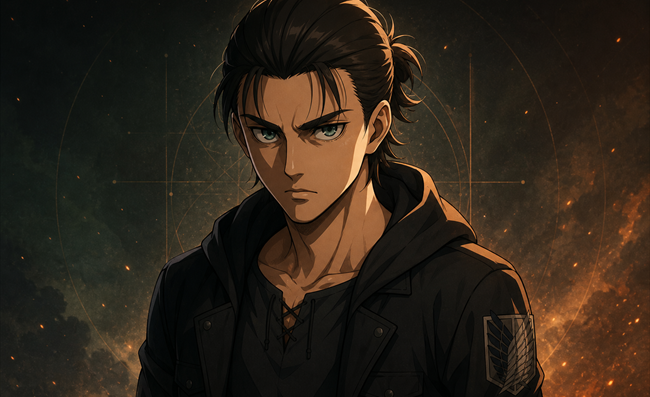
Eren Yeager
If someone tries to take my freedom away, I will take theirs
The function and energy-center mappings are this site’s interpretive model, not validated psychometric findings. Content is for self-exploration and does not provide psychological diagnosis or treatment advice.
Read the model’s theoretical limits · References and disclaimer