The shared core of Type 2
The following explanation is shared by all three instinctual subtypes of Type 2, drawn from our theory guide. The energy and function mappings are this site’s interpretive model.
Type 2: the entitlement to be loved
Type 2 has abundant heart energy and is a characteristic provider of emotional support, understanding others' needs and willingly responding. This corresponds to extraverted feeling (Fe).
The key is the meaning of pride. It is not surface arrogance, but an unconscious emotional entitlement: “Everyone should naturally love me.” Seeing oneself as a source of love makes giving without counting costs possible. Consciously, this becomes an assumed reciprocal contract: “I am so good to everyone that they should love and treat me well.”
When the contract fails, entitlement appears. Without the expected warm response, Two feels not merely disappointed but that an order has been violated. Warmth can turn rapidly to resentment, giving to emotional demands. This does not deny generosity; it exposes an unexamined premise behind it.
Sketch
Two usually evokes an eager caregiver. Sp2 almost reverses that picture: less actively giving, more like an appealing child—gentle, playful and slightly pampered—who naturally elicits care. Naranjo described an apparent weightiness that dissolves on closer inspection into a child.
Keyword: Privilege
Ichazo's phrase was “I am the most important.” Naranjo initially mistook it for peacock-like grandeur, then understood infantile self-centeredness: not wanting to earn attention through achievement, obedience or contribution. Love should require no reason; simply being here should suffice. That is Sp2's privilege.
Passion × instinct
Two's pride is fundamentally “I deserve love.” Sp2 achieves it through a childlike presentation rather than Sx2's targeted seduction or So2's prominence. Cuteness itself attracts, especially people inclined to care. The cost is avoiding responsibility and remaining self-centered. In this site's model, self-preservation's discretion and safety conflict with the heart's need to be seen and evaluated. Sp2 therefore approaches relationships while fearing injury, appearing shyer, more guarded and more selective in giving than other Twos.
Everyday patterns
- Is humorous, affection-seeking and somewhat childlike at any age.
- Responds to hurt with sulking, cooling off or hiding rather than loud confrontation.
- Hesitates over major commitments, fearing confinement and exploitation.
- Enjoys pleasures and may soothe themselves through food, drink and play.
Commonly confused types
Relational hesitation resembles Six, sensitivity resembles Four, and pleasure-seeking resembles Seven. The key is the premise: “I should be cherished without doing anything.” Six does not assume this, Four feels undeserving, and Seven does not want dependence.
Blind spots and growth
The blind spot is failing to see cuteness as a strategy and the demands placed on others. Growth means becoming willing to grow up: explicitly ask for care, accept responsibility without feeling deprived, and genuinely give as well as receive. Discovering that independence and being loved can coexist loosens entitlement.
Anime character comparisons
These character classifications come from our test. Consider each character within their story and compare the motivation “A charming childlike Two who hopes to be loved without earning it.” These are interpretations of fictional works.
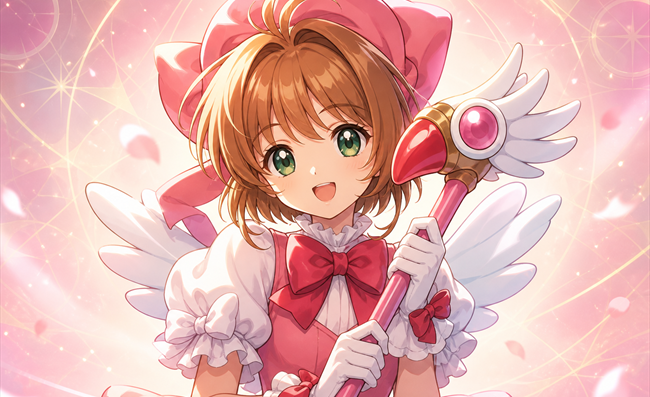
Sakura Kinomoto
Sakura Kinomoto is this site’s character comparison for Sp2. Consider the character through the motivation “A charming childlike Two who hopes to be loved without earning it.”
The function and energy-center mappings are this site’s interpretive model, not validated psychometric findings. Content is for self-exploration and does not provide psychological diagnosis or treatment advice.
Read the model’s theoretical limits · References and disclaimer